Evolving AI from Feature to Product
Building an AI assistant that expanded from a free user tool into a paid enterprise capability
⏰ Timeline
6 months
👥 Team
1 PM + 2 Engineers
📌 Role
Design Lead
Overview
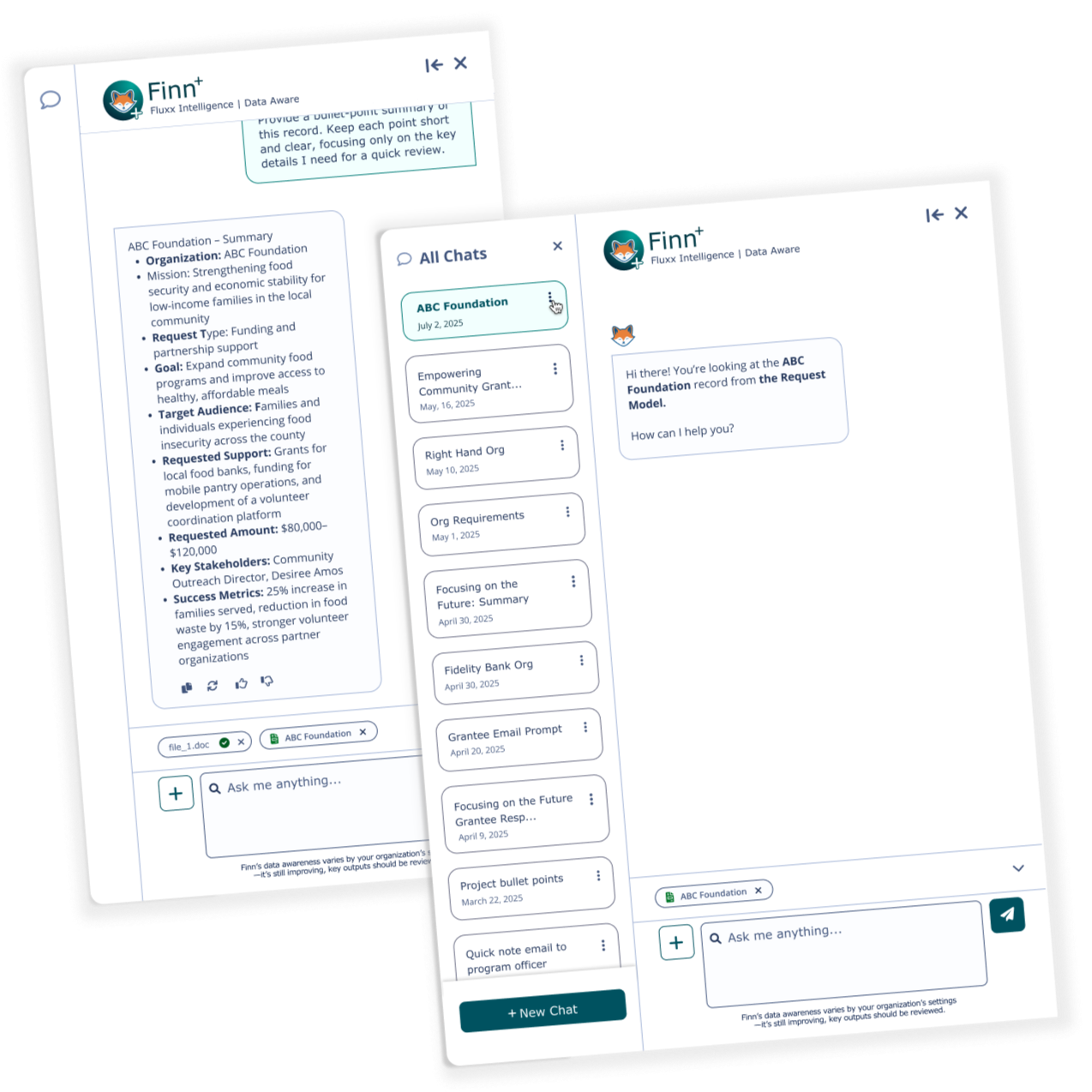
As AI adoption accelerated across our customer industries, we identified a new opportunity to help customers quickly understand complex grant data and reduce time spent searching through years of records.
I led the design evolution of our AI assistant, from an early conversational prototype into a tiered product experience that supported both user adoption and business growth.
Impact
Increased AI adoption by 15%
Reduced document review time by 25%
Created a free-to-paid product pathway supporting AI monetization
Expanded AI capabilities across enterprise workflows
Delivered a consistent AI experience across desktop and mobile platforms.
The Challenge
AI features had the potential to simplify complex grantmaking workflows, but our nonprofit and government customers work with sensitive data in highly regulated environments where trust is critical.
We needed to answer four key questions:
How do we introduce AI in a way that customers trust and adopt?
Which features should be free, and which should be part of a premium offering?
How do we make AI responses transparent and reliable?
How do we create a product that delivers value for both customers and the business?
Phase 1: Validating AI Through a Free Experience
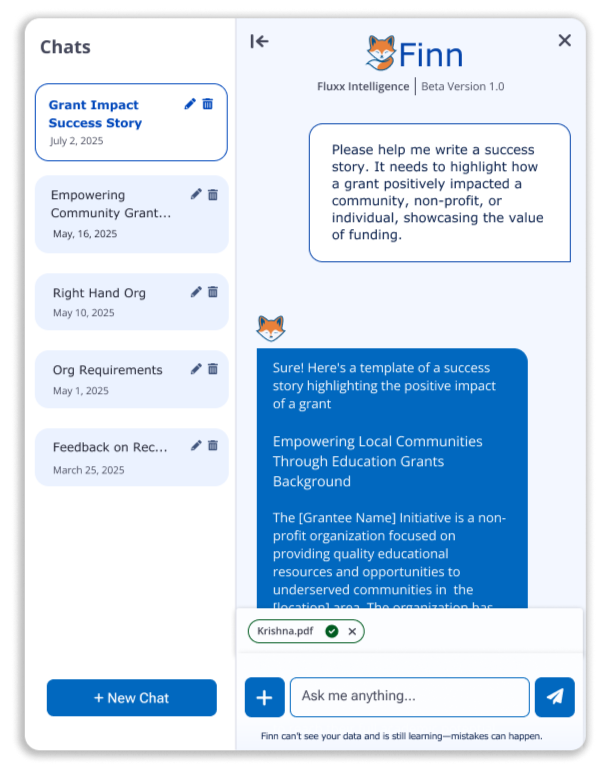
To understand where AI could create the most value, we quickly built and launched a proof of concept for a free AI chatbot in just a few weeks.
Rather than over-designing and engineering the first release, we focused on getting the experience into users’ hands, gathering real-world feedback, and using those insights to rapidly improve the product.
Goals:
Validate real customer use cases and AI workflows
Build trust and familiarity with AI capabilities
Identify user needs, behaviors, and opportunities for expansion
Create a foundation for future AI product development
Initial capabilities:
Writing support for grant documentation and communications
Industry-specific guidance related to grantmaking workflows
Secure AI interactions using customer data within a trusted environment
AI was opt-in, allowing customers to adopt AI on their terms.
Not mobile responsive at this stage
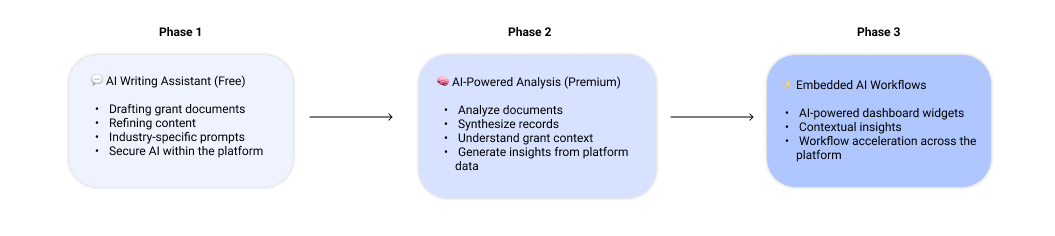
Phase 2: Expanding AI Into Enterprise Workflows
As adoption grew, we identified opportunities to move beyond writing assistance and help customers analyze, understand, and act on their grantmaking data.
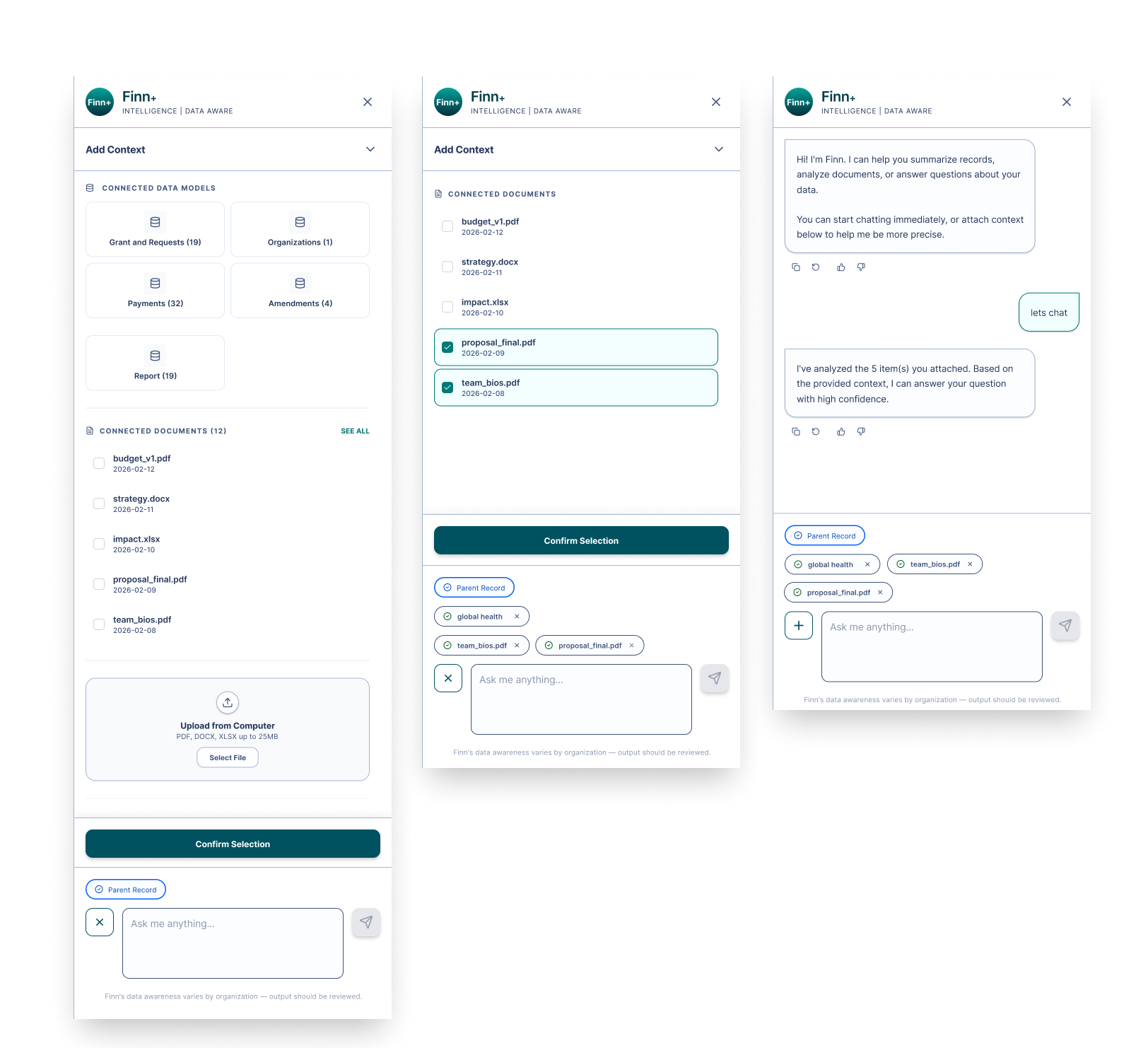
The premium experience integrated AI directly into the platform, allowing customers to synthesize documents, analyze records, and uncover insights using the full context of their existing data. By connecting AI to information already within the system, users could work with a complete view of their grants, organizations, and workflows—without moving data outside the platform.
The paid experience introduced:
AI-powered document and record analysis
Contextual insights using data already within the platform
Advanced workflows integrated into the dashboard experience
AI capabilities embedded within dashboard widgets and everyday workflows
Secure document uploads for analysis and deeper insights
Delivered a consistent AI experience across desktop and mobile platforms.
The challenge was creating a clear path from the free experience to premium capabilities while ensuring AI remained trusted, valuable, and deeply integrated into how customers work.
Designing the Free-to-Paid Journey
I partnered with Product and Engineering to define how AI could evolve from an accessible entry point into a deeper enterprise capability.
We designed a tiered experience that allowed customers to build trust with AI through a free writing assistant, while creating clear pathways to premium workflows powered by their internal data.
Key decisions included:
Defining core AI capabilities that delivered immediate value for all users
Identifying premium opportunities around document analysis, data synthesis, and workflow automation
Creating upgrade moments that aligned with high-value customer needs
Designing permissions and data boundaries for secure AI usage in regulated environments
Establishing scalable AI interaction patterns across chatbot experiences and dashboard workflows
The result was a flexible AI product strategy that increased adoption, maintained customer trust, and created a foundation for long-term business growth.
Building an AI Design System
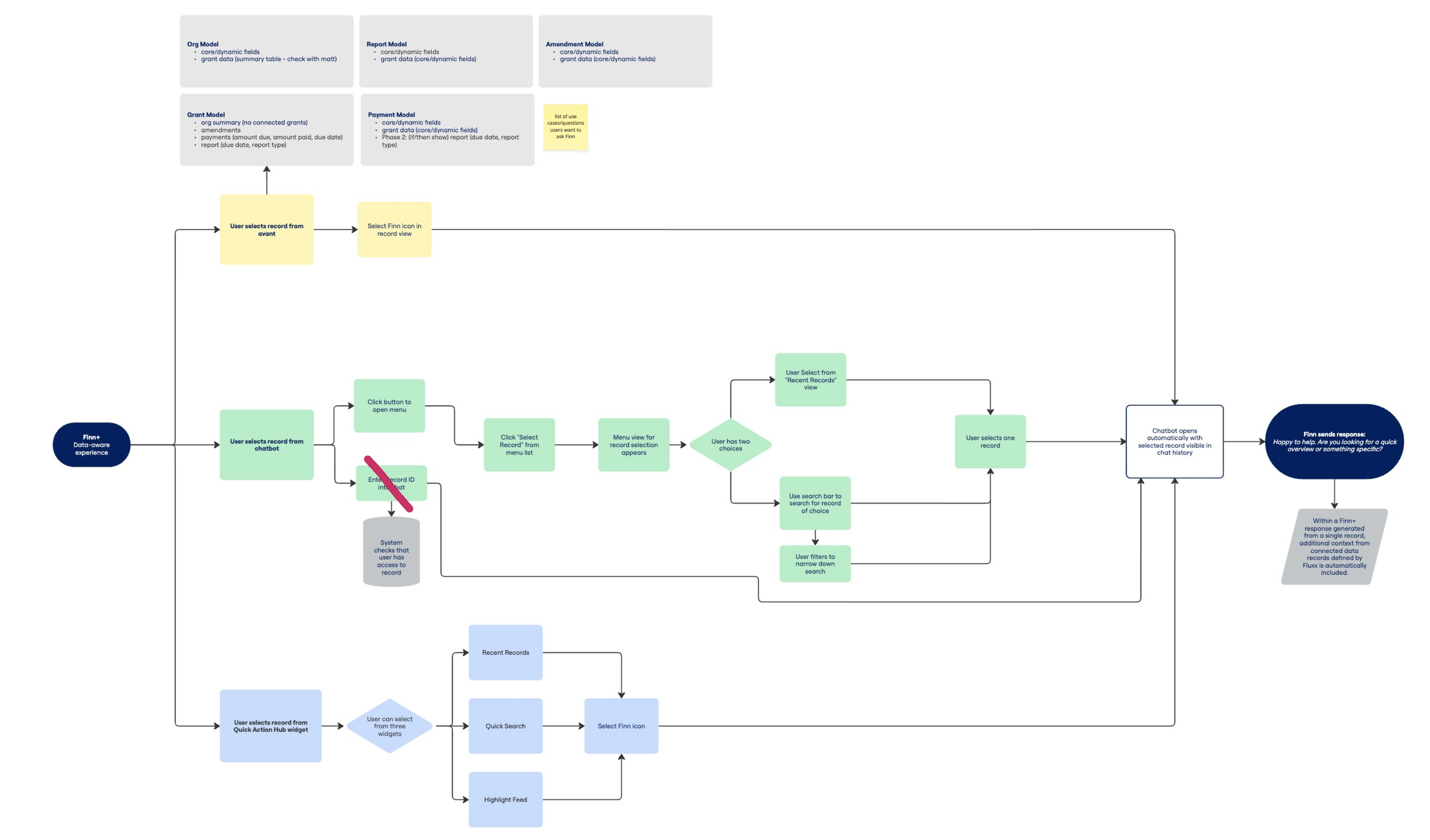
As AI capabilities expanded from a chatbot into embedded platform experiences, we needed a consistent framework for designing trusted AI interactions across the product.
I partnered with my front-end engineer to componentize AI design patterns directly in Git and leveraged Claude to accelerate iteration, helping teams build AI experiences that were intuitive, transparent, and scalable.
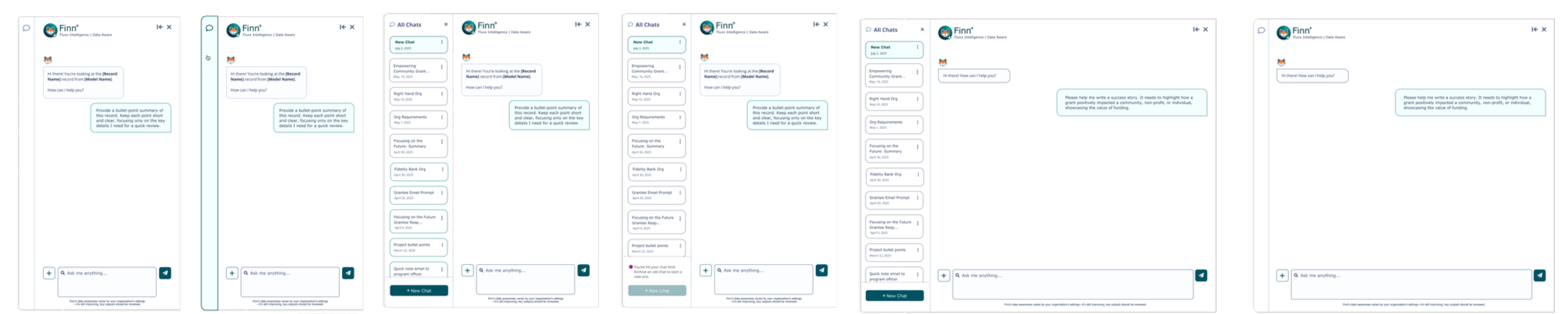
Key patterns included:
Conversational interactions and prompt experiences
AI responses, insights, and recommendation states
Loading, processing, and uncertainty moments
Error handling and recovery experiences
Trust-building patterns for AI-generated content
Human-in-the-loop workflows and user controls
AI integration patterns across chatbot and dashboard experiences
These patterns created a foundation for scaling AI across the platform while maintaining consistency, transparency, and customer trust.
What's Next
The AI assistant continues to evolve into an intelligent layer across the platform, helping users discover information, accelerate workflows, and make better decisions.
Future iterations will continue to expand AI capabilities based on customer needs, emerging workflows, and opportunities to deliver more value across the product experience.